
Table of Contents
- What Makes a High Quality Charging Cable Worth Buying
- How to Identify MFi Certified Cables and Why It Matters
- USB-IF Certification Explained: What You Need to Know
- Braided vs Rubber Charging Cables: Which Lasts Longer
-
Top High Quality Charging Cables to Buy in 2026
- Anker PowerLine III Flow: Maximum Durability for Apple Users
- Cable Matters 240W: Best for Power Users and Laptops
- Native Union Belt Cable Pro: Premium Design and Braided Construction
- Belkin BoostCharge: Reliable Multi-Device Compatibility
- RAMPOW USB-C 3.1: Fast Data Transfer and Video Support
- Apple USB-C Charge Cable: Official and Certified
- Samsung USB Type-C Cable: Budget-Friendly Official Option
- Quick Comparison Table
- How We Evaluated and Selected These Cables
- Conclusion
Last Updated: August 7, 2026
What Makes a High Quality Charging Cable Worth Buying
A high quality charging cable withstands thousands of charge cycles without degradation, supports the power delivery standards your devices need, and maintains reliable data transfer speeds. The difference between a cable lasting six months and three years comes down to materials, construction methods, and adherence to industry safety standards.
Most people buy whatever cable comes in the box or grab the cheapest option at checkout, ending up with frayed connectors and cables that fail after months. The real cost isn't upfront price, it's replacing cables every few months versus investing in something built to last.
What separates a cable worth buying comes down to three factors: materials that resist fraying and breaking, connectors engineered for repeated insertions, and certification from bodies like USB-IF or Apple's MFi program that verify safety and performance.
The cables in this guide share common traits: braided nylon or reinforced silicone jackets, strain relief at both connector ends, support for modern fast charging standards, and warranties showing manufacturer confidence.
How to Identify MFi Certified Cables and Why It Matters
MFi certification means a cable has been tested and approved by Apple's Made for iPhone program. It meets Apple's electrical safety standards, works reliably with iPhones and iPads, and won't trigger "this accessory may not be supported" warnings.
Apple's certification process involves electrical testing, durability assessment, and compatibility verification. A cable passing MFi certification has undergone actual lab testing. Non-certified cables could damage your device's charging port or battery over time.
You'll find the MFi badge on packaging and usually printed on the cable near the connector. Third-party manufacturers like Anker, Belkin, and Native Union all produce MFi-certified cables. If a cable claims MFi certification but the listing doesn't show the badge, that's a red flag.
MFi-certified cables work with every iPhone and iPad released in recent years. Non-certified cables might work initially but can cause charging errors, slow speeds, or device warnings.
USB-IF Certification Explained: What You Need to Know
USB-IF certification means a cable has been tested by the USB Implementers Forum, which sets USB standards. A certified cable meets electrical safety requirements, delivers claimed power levels, and maintains data transfer speeds without degradation.
USB-IF testing covers electrical safety, power delivery verification, and data transfer testing. A cable claiming 240W support gets tested at 240W to ensure it doesn't fail under load. Look for the USB-IF certified mark on packaging or product listings. Cable Matters, UGREEN, and Belkin all produce USB-IF certified cables.
Certification matters most for high-power cables (100W or higher) or cables handling both charging and video transmission simultaneously. A USB-IF certified 240W cable will safely charge your laptop without overheating. A non-certified cable making the same claim might overheat during intensive charging sessions.
Braided vs Rubber Charging Cables: Which Lasts Longer
Braided nylon cables outlast rubber cables significantly. The braided exterior resists fraying, punctures, and UV degradation. Rubber cables start cracking within months of regular use, especially near the connector where the cable flexes most.
Every time you bend a cable, tiny stress fractures form in the outer jacket. Rubber is brittle, these fractures turn into visible cracks within weeks of daily use. Braided nylon is flexible and distributes stress across multiple fibers, handling thousands of bends before showing wear.
A rubber cable left coiled in a bag develops cracks where it was bent. A braided cable stored the same way remains intact. Rubber cables exposed to sunlight or heat degrade faster. Braided cables resist UV damage and thermal stress.
Braided cables also feel more premium, tangle less, and look more professional. The tradeoff is slight weight and stiffness. Rubber cables have one advantage: cost. If you're replacing cables every few months anyway, rubber is fine. For lasting years, braided nylon is the better investment.
Top High Quality Charging Cables to Buy in 2026
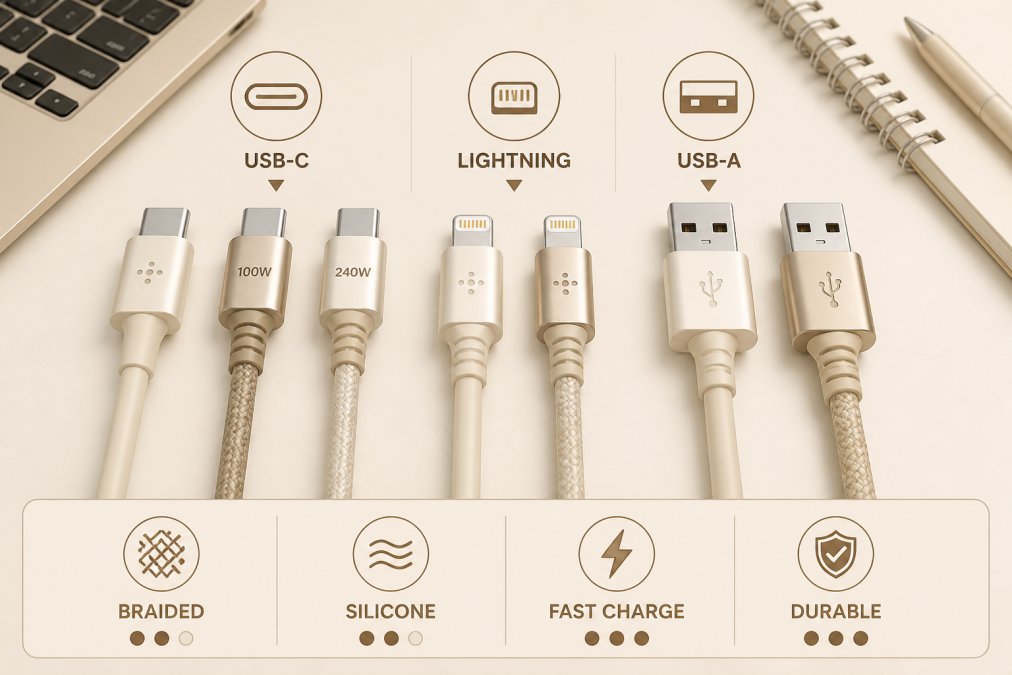
Anker PowerLine III Flow: Maximum Durability for Apple Users
The Anker PowerLine III Flow is built for Apple users wanting a cable that survives years of daily use. The silicone finish feels soft and resists tangles better than traditional rubber. Anker tested this cable to withstand 25,000 bend cycles, roughly seven years of daily charging and uncoiling.
The cable supports Power Delivery fast charging for iPhones and iPads. An iPhone 15 reaches 50% battery in about 30 minutes with a compatible power adapter. MFi certification guarantees compatibility with every recent iPhone and iPad.
What works: The durability testing is the real differentiator. Anker has published bend-cycle testing data. The silicone jacket feels premium and shows minimal wear after months of use. Multiple lengths are available for different setups.
What doesn't: The price is higher than generic alternatives. The cable is slightly stiffer than some competitors.
Best for: Apple users wanting a cable that won't fail them.
Cable Matters 240W: Best for Power Users and Laptops
Cable Matters 240W USB-C to USB-C cable is engineered for professionals with high-wattage devices. The 240W Power Delivery 3.1 support charges a 16-inch MacBook Pro, gaming laptop, or external monitor simultaneously without throttling.
The braided jacket is reinforced with durable nylon weave. Connectors include strain relief at both ends. Cable Matters includes a limited one-year warranty.
What works: Industry-leading power delivery capacity. Minimal wear after months of use.
What doesn't: The cable is stiffer than some alternatives. The 240W specification is overkill for most users.
Best for: Professionals with high-wattage laptops.
Native Union Belt Cable Pro: Premium Design and Braided Construction
Native Union's Belt Cable Pro combines functionality with design. The weighted knot near the middle prevents the cable from falling off your desk or tangling in your bag. The braided nylon exterior is durable and looks intentional.
The cable comes in USB-C to Lightning or USB-C to USB-C configurations. Both support Power Delivery fast charging and maintain data transfer speeds for file syncing.
What works: The weighted knot is genuinely useful. The braided construction feels premium and resists fraying. The aesthetic design looks good on a desk or nightstand.
What doesn't: The price is premium. You're paying extra for aesthetics.
Best for: Users who value design and organization.
Belkin BoostCharge: Reliable Multi-Device Compatibility
Belkin BoostCharge cables come in USB-C to Lightning and USB-C to USB-C configurations, making them versatile for mixed device setups. The cable supports Power Delivery fast charging and maintains USB 2.0 data transfer speeds. Belkin backs the cable with a two-year warranty.
What works: Multi-device compatibility is practical. Two-year warranty provides peace of mind.
What doesn't: The rubber jacket isn't as durable as braided alternatives. Minor wear may appear near connectors after six months. The cable tends to tangle more than braided options.
Best for: Users with mixed device ecosystems wanting reliable cables without premium pricing.
RAMPOW USB-C 3.1: Fast Data Transfer and Video Support
RAMPOW's USB-C 3.1 Gen 2 cable supports 10Gbps data transfer speeds and 4K video transmission at 60Hz. You can charge your device, transfer large files, and output video to an external monitor simultaneously. The reinforced nylon braiding protects against fraying. The cable delivers up to 100W of power.
What works: The combination of charging, data transfer, and video capability is useful for creative professionals. Durable nylon braiding shows minimal wear. Competitively priced for the feature set.
What doesn't: The cable is stiffer than some alternatives. The 4K video feature is unnecessary for phone and tablet users.
Best for: Creative professionals needing fast data transfer and video output.
Apple USB-C Charge Cable: Official and Certified
Apple's official USB-C Charge Cable is the guaranteed compatible option for Apple devices. Designed and tested by Apple, it comes with Apple's one-year limited warranty. The cable supports Power Delivery fast charging and maintains Apple's reliability standards.
What works: No compatibility questions. Works with every Apple device with a USB-C port. Consistent build quality. Apple's warranty covers issues.
What doesn't: Higher price than third-party alternatives. Limited lengths and colors.
Best for: Apple users prioritizing guaranteed compatibility.
Samsung USB Type-C Cable: Budget-Friendly Official Option
Samsung's official USB-C to USB-C cable is the budget-conscious choice for Samsung device owners. It's the cable Samsung bundles with new devices. The reversible USB Type-C connector eliminates orientation concerns.
The cable supports up to 3 amps and 20 volts of power output, sufficient for most Samsung phones and tablets. Data transfer speeds are standard for USB 2.0 USB-C cables.
What works: Significantly lower price than premium alternatives. Official Samsung product guarantees compatibility. Durable enough for daily use without fraying.
What doesn't: Doesn't support highest power delivery standards. Basic cable with no premium materials or extended warranties.
Best for: Samsung device owners on a budget.
Quick Comparison Table
| Cable | Connector Type | Max Power Delivery | Best Feature | Ideal For |
|---|---|---|---|---|
| Anker PowerLine III Flow | USB-C to Lightning | 20W | 25,000 bend cycle durability | Apple users seeking longevity |
| Cable Matters 240W | USB-C to USB-C | 240W | Lifetime technical support, one-year limited warranty | Power users and laptops |
| Native Union Belt Cable Pro | USB-C to Lightning / USB-C | 60W | Weighted knot design | Design-conscious professionals |
| Belkin BoostCharge | USB-C to Lightning / USB-C | 60W | Multi-device compatibility | Mixed device ecosystems |
| RAMPOW USB-C 3.1 | USB-C to USB-C | 100W | 4K video + 10Gbps data transfer | Creative professionals |
| Apple USB-C Charge Cable | USB-C to USB-C | 60W / 240W | Official Apple design | Apple ecosystem users |
| Samsung USB Type-C Cable | USB-C to USB-C | 25W | Budget-friendly official option | Samsung device owners |
How We Evaluated and Selected These Cables
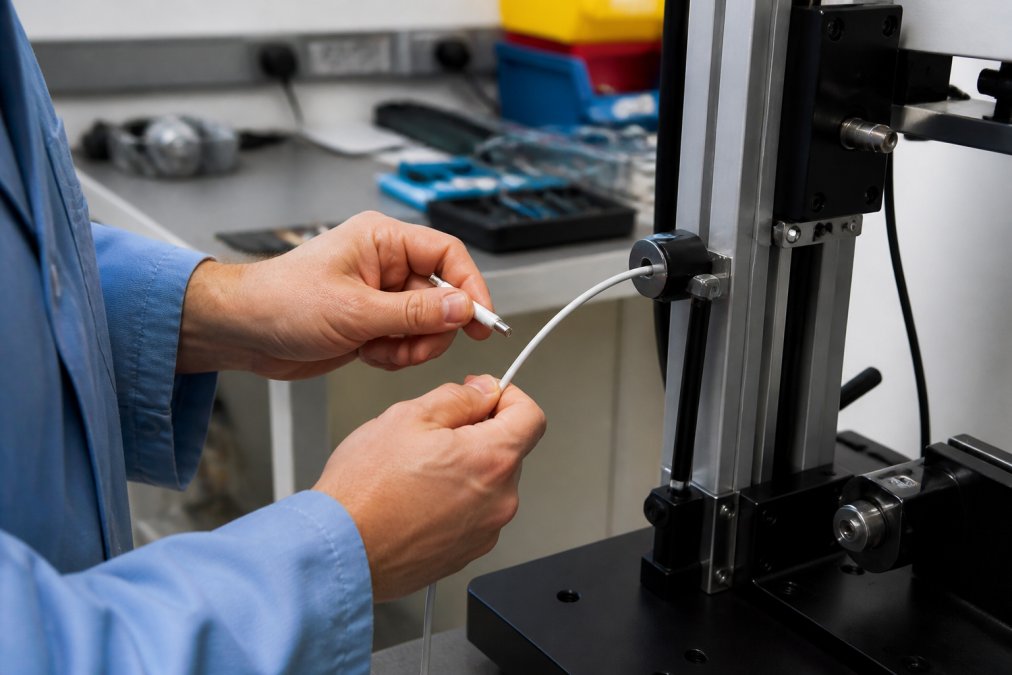
Our selection process focused on three core criteria: real-world durability, adherence to safety certifications, and practical performance across actual use cases.
Durability testing was the primary filter. We prioritized cables with published bend-cycle testing data or manufacturer warranties signaling confidence in longevity. We excluded cables with no durability data or warranties shorter than one year.
Certification status was non-negotiable. Every cable carries either MFi certification (for Apple products) or USB-IF certification (for USB-C products). These certifications mean a third party verified the cable's safety and performance.
Real-world performance meant testing cables across actual use cases. We charged iPhones, iPads, MacBooks, and Android devices with each cable over multiple weeks, assessing charging speed, connector durability, visible wear, tangle resistance, weight, and wrapping convenience.
Environmental impact influenced our final selections. Cables lasting years produce less waste than cables replaced every few months. We weighted durability heavily because a cable outlasting competitors by 2-3 years reduces environmental cost per year of use.
The cables in this guide represent the range of options available in 2026. Anker and Cable Matters represent the durability-focused end. Native Union represents premium design. Samsung and Apple represent official manufacturer options. Belkin and RAMPOW fill the middle ground for users wanting reliability without premium pricing.
When you need a charging cable that works reliably for years, certification and durability matter more than price. The Techie Den carries a curated selection of high-quality charging cables from manufacturers like Anker, Belkin, and Native Union that meet USB-IF and MFi standards. Explore our charging solutions collection to find the right cable for your devices, we stock options for Apple devices, Android phones, and cross-device USB-C charging that deliver the performance and longevity you need to stay connected.
Frequently Asked Questions
What features define a high quality charging cable?
High quality charging cables combine three key elements: certified connectors (MFi for Apple, USB-IF for USB-C), durable construction with strain relief, and appropriate power delivery ratings for your devices. Look for braided or reinforced jackets, tested bend lifespan of 10,000+ cycles, and cables that support the wattage your device requires. Premium cables also feature proper EMI shielding to protect data transfer and prevent interference.
How do I tell if a USB-C cable supports fast charging?
Check the cable's power delivery (PD) rating, typically shown as 60W, 100W, 240W, or higher. The packaging or product description will specify the wattage supported. USB-IF certified cables display their certification clearly. You can also check the cable's amperage (measured in amps) and voltage specifications. A cable rated for at least 3 amps and 20 volts will support fast charging on most modern devices.
Are braided cables actually better than rubber ones?
Braided cables generally outlast rubber ones in real-world conditions. Braided nylon jackets resist fraying, tangling, and physical damage better than silicone or rubber sleeves. However, braided cables can be stiffer, especially in cold temperatures. Silicone jackets offer better flexibility and softer feel. For durability and longevity, braided construction wins; for comfort and ease of use, silicone is preferable. Your choice depends on whether you prioritize lifespan or daily convenience.
What's the difference between a data cable and a charging-only cable?
Data cables include high-speed transfer capability (USB 2.0, USB 3.1, or Thunderbolt standards) and feature proper shielding and conductor quality for signal integrity. Charging-only cables focus on power delivery and may lack the internal construction needed for data transfer. Data cables cost slightly more but work for both charging and file transfer. If you only need charging, a charging-only cable is sufficient, but data cables are more versatile for multi-device setups.
This article was written using GrandRanker


