

Table of Contents
- Why Standard Earbuds Fail in the Gym (and What to Look For)
- IPX7 vs IPX8 Waterproof Rating for Headphones: What Actually Matters
- Quick Comparison: Top Durable Waterproof Earphones
- 1. Bluetooth 5.3 Ear Hook Headphones: Best for Long Workouts
- 2. T75 Bone Conduction Headphones: Best for Open-Ear Awareness
- 3. VAORLO Ear-Hook Earbuds: Best Budget Pick for Secure Fit
- Best Workout Earbuds for Secure Fit: Hooks vs Fins vs In-Ear
- How to Maintain Waterproof Fitness Earbuds for Long-Term Use
- Frequently Asked Questions
Last Updated: September 8, 2026
Few things kill a workout faster than an earbud that dies mid-set or shorts out from sweat. Finding truly durable waterproof earphones for active fitness means looking past flashy marketing and understanding what actually survives repeated abuse. The three picks below cover different training styles.
The core tension is simple: most earbuds are designed for commuting, not high-intensity interval training where sweat pools and movement is constant. Waterproofing ratings get thrown around casually, but the difference between an IPX4 splash rating and true submersion protection is massive.
Why Standard Earbuds Fail in the Gym (and What to Look For)
The primary failure mode for gym earbuds is moisture ingress. Sweat is corrosive and finds every seam, charging port, and driver opening over time. Standard earbuds with an IPX4 rating handle light splashes but degrade quickly under the constant moisture and heat of a long workout.
Beyond water, physical stress kills earbuds. Repeated dropping, cable tugging, and compression in a gym bag take their toll. Look for reinforced housings, sealed charging ports, and strain-relieved connection points.
IPX7 vs IPX8 Waterproof Rating for Headphones: What Actually Matters
IPX7 vs IPX8 waterproof rating for headphones comes down to submersion depth and duration. IPX7 means the device survives immersion in up to 1 meter of water for 30 minutes. IPX8 goes further, typically rated for submersion beyond 1 meter, but the exact depth and time depend on the manufacturer's specifications.
For fitness use, IPX7 is the practical sweet spot. It handles heavy sweat, rain, and an accidental drop in a puddle or sink. IPX8 is overkill for gym sessions unless you swim laps. What matters more than chasing the highest number is ensuring the rating covers your actual use case, sweat resistance and occasional rain, not deep-water submersion.
Consumer Reports guide on water resistance ratings explains that manufacturers test these ratings under controlled lab conditions, which rarely mirror real-world gym environments. Sweat contains salts and acids that are more corrosive than the fresh water used in certification testing.
Quick Comparison: Top Durable Waterproof Earphones
| Model | Price | Bluetooth | Battery Life | Best For | Key Strength |
|---|---|---|---|---|---|
| Bluetooth 5.3 Ear Hook | $11.99 | 5.3 | 7 hrs (24 hrs with case) | Long sessions | Low latency, IPX4, touch controls |
| T75 Bone Conduction | $3.99 | 5.1 | 5 hrs | Open-ear awareness | Bone conduction, 123dB sensitivity |
| VAORLO Ear-Hook | $3.99 | 5.2 | 5 hrs (180 hr standby) | Budget secure fit | 5g weight, ergonomic ear hook |
Each of these durable waterproof earphones serves a different training profile. The Bluetooth 5.3 pair is the workhorse for extended gym visits, the T75 suits runners who need ambient awareness, and the VAORLO is the budget option for explosive movements.

1. Bluetooth 5.3 Ear Hook Headphones: Best for Long Workouts
This pair from The Techie Den is our top pick for athletes who spend over an hour in the gym. The Bluetooth 5.3 connection delivers stable wireless audio with low latency, which matters if you follow along with workout videos or run interval timers. The IPX4 rating handles sweat and light rain, while the 16mm drivers push a sealed, HiFi stereo sound.
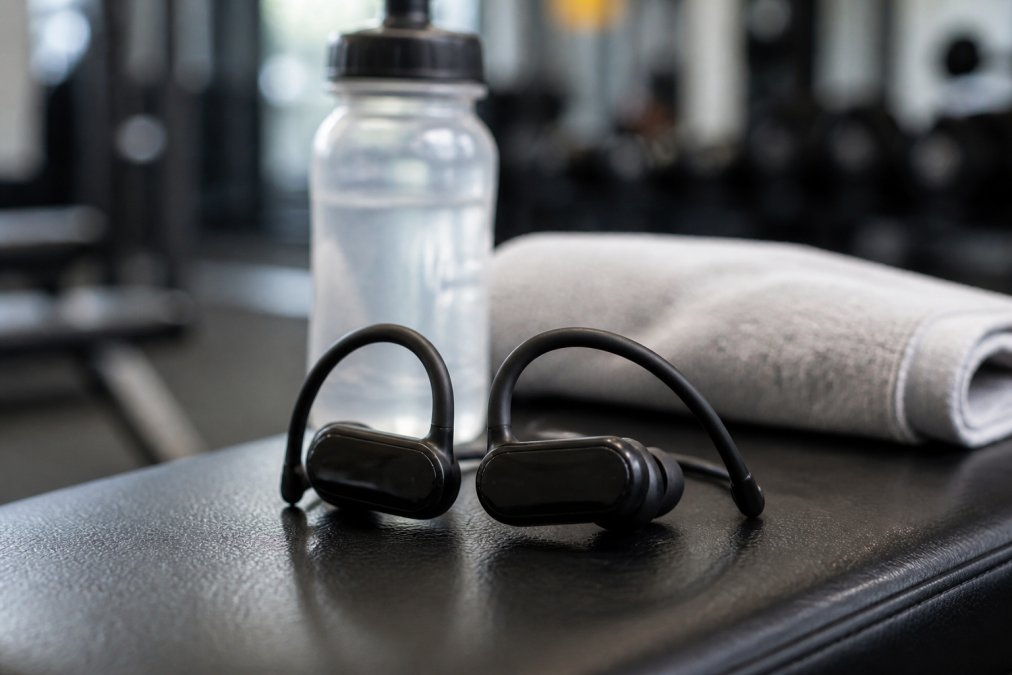
Battery life is where this model separates itself. You get 7 hours of playback per charge, extended to 24 hours with the 250mAh charging case featuring an LED display. The ear hook design distributes weight across the outer ear, reducing clamping force that causes fatigue. Touch controls handle volume, calls, and voice assistant integration without breaking your stride.
For $11.99, you're getting active noise cancellation, a 200-hour standby time, and a non-in-ear design. The one limitation is the IPX4 rating, which is sufficient for sweat but not for submerging the buds in water.
2. T75 Bone Conduction Headphones: Best for Open-Ear Awareness
Runners and cyclists should pay attention here. The T75 bone conduction headphones keep your ear canals open, so you maintain full situational awareness of traffic, other athletes, and your surroundings. This safety feature traditional sealed earbuds cannot offer is why many outdoor athletes prefer this style.

The bone conduction driver transmits sound through your cheekbones rather than into the ear canal. This leaves the canal open, reducing moisture buildup and the risk of infections from wearing sealed silicone tips for hours.
At $3.99, this is an entry-level price for bone conduction technology. The Bluetooth 5.1 connection covers up to 10 meters, and the 400mAh charging case provides roughly five hours of use per charge. The tradeoff is audio fidelity: bass response is weaker than traditional drivers.
3. VAORLO Ear-Hook Earbuds: Best Budget Pick for Secure Fit
If your current earbuds fall out during burpees or box jumps, the VAORLO ear-hook design solves that problem. The 108-degree elevation angle and internal silicone earplugs follow the natural shape of your auricle, dispersing stress points so the buds stay locked in during explosive movements.

The ergonomic fit is the headline feature, but the VAORLO also holds its own on battery. You get 180 hours of standby time and roughly 5 hours of playback, with a one-hour charge time via USB. The Bluetooth 5.2 chip provides stable transmission up to 15 meters with low latency.
One important caveat: this model is a single earbud, not a TWS pair. It supports the right ear only, designed for taking calls or listening while keeping one ear free. Read the product listing carefully before purchasing, as this differs from the other two picks.
Best Workout Earbuds for Secure Fit: Hooks vs Fins vs In-Ear
The 'best' secure fit isn't a single design, it's a function of your activity's movement patterns and your ear's unique anatomy. Top guides often stop at 'hooks are for running, fins are for lifting,' but that oversimplification leads to mid-workout adjustments and premature wear.
Running & Sprinting: The primary force is vertical impact, which dislodges earbuds that rely on a seal in the ear canal. Ear hooks are the most reliable choice because they physically anchor the bud to the antihelix, preventing the 'piston effect' of your footstrike from working the tip loose. Look for hooks with a semi-rigid core that holds its shape.
Lifting & HIIT: Movements like burpees, box jumps, and overhead presses introduce lateral and rotational forces a simple ear hook may not fully counteract. A design combining a hook with a wingtip or fin that sits in the concha offers the most stability. This dual-anchor approach distributes the load across two points, preventing the bud from twisting out during explosive movements.
Yoga & Low-Impact: For activities with minimal head movement, a well-designed in-ear bud with a multi-point tip may suffice. However, the constant pressure of the tip against the ear canal can cause discomfort during long holds or floor poses. A lighter, smaller bud with a secure but less invasive fit is often better than a bulky hook.
The Anatomy Factor: Ear hooks are not a universal solution. If you have a 'thick' or 'folded' antihelix, a standard hook might not seat properly and can create a pressure point causing pain within 30 minutes. Conversely, if you have a narrow concha, a fin-style tip will likely be too tight. The most durable choice is the one that fits without causing pain.
For long-term durability, consider the hook's material. Silicone hooks are comfortable but can degrade and lose elasticity with constant exposure to sweat and UV light. A hard plastic hook with a thin silicone coating is more resistant to this wear, but it must have a precise fit to avoid pressure points.
How to Maintain Waterproof Fitness Earbuds for Long-Term Use
Most buying guides stop at the purchase. But the 'durable' part of your keyword is a promise broken not in the product's design, but in its maintenance. The #1 cause of premature failure in 'waterproof' earbuds isn't a manufacturing defect, it's the corrosive residue left behind by your own sweat. Here is a protocol to extend the life of your units.
The Immediate Post-Workout Wipe-Down (Non-Negotiable): Within 5 minutes of finishing your session, wipe down the entire surface of the earbuds and the charging case with a dry, lint-free microfiber cloth. This isn't about removing visible moisture; it's about removing the invisible salt and urea crystals that form as sweat evaporates. These crystals are hygroscopic, attracting moisture from the air and accelerating corrosion of the internal contacts and speaker mesh.
The Weekly Deep-Clean Protocol: Once a week, perform a more thorough cleaning.
- Remove the silicone tips and ear hooks. Wash them in a bowl of warm water with a drop of mild, fragrance-free dish soap. Avoid using alcohol, which can dry out and crack the silicone over time.
- Rinse thoroughly and allow them to air dry completely on a paper towel. This takes several hours; do not reattach them until they are 100% dry.
- Clean the buds themselves. Use a dry, soft-bristled toothbrush or a dedicated electronics cleaning brush to gently sweep away debris from the speaker mesh and the charging contacts. Do not use water or any liquid on the buds themselves unless they are rated IPX7 or higher and you are following the manufacturer's specific cleaning instructions.
- Sanitize the mesh. For the speaker mesh, a piece of 'Blu-Tack' or a specialized cleaning putty can be gently pressed against the mesh to lift out dried sweat and earwax that a brush can't reach. This is critical for maintaining sound clarity.
The Charging Case: The Silent Killer: The case is the most vulnerable component. Sweat on your earbuds transfers to the case's charging cradle. Over time, this residue oxidizes the charging pins, leading to intermittent charging failures often misdiagnosed as a dead battery. To prevent this, inspect the case's charging contacts weekly. If you see discoloration or buildup, use a dry cotton swab to clean them.
Storage and Environmental Control: Do not leave your earbuds in a hot car or a humid gym bag. Extreme heat accelerates the degradation of the adhesives that hold the waterproof membranes in place. When not in use, store them in their case in a cool, dry place.
The Repairability Mindset: Most fitness earbuds are not designed to be repaired. The IP rating is achieved through a sealed, glued enclosure, meaning when the battery degrades after 2-3 years, the entire unit is typically e-waste. Before you buy, check if the manufacturer offers a replacement battery service or a trade-in program. A $50 pair that lasts 2 years is a better value than a $30 pair that fails in 8 months due to poor maintenance.
Frequently Asked Questions
What IPX rating do I need for waterproof workout headphones?
For gym sessions and heavy sweating, IPX4 is the minimum you should accept. For outdoor running in rain or intense classes where you drench the earbuds, IPX5 or IPX6 offers better protection. If you plan to submerge them in water, like for swimming, you need IPX7 or IPX8 certification. The durable waterproof earphones in this guide offer at least IPX4 protection, which handles sweat and light rain.
How do I clean waterproof earbuds after a sweaty workout?
After each workout, wipe the earbuds with a dry microfiber cloth to remove sweat and debris. Once a week, use a soft-bristled brush to clean the speaker mesh and ear hook crevices. Avoid using compressed air or inserting tools into the nozzle, as this can push debris deeper. Let them air dry fully before placing them in the charging case to prevent moisture ingress.
What features make fitness earbuds more durable than standard models?
Durable fitness earbuds feature a waterproof construction with an IPX rating, protecting against sweat and moisture ingress. They also use ruggedized materials like silicone or ABS plastic that resist impacts. Secure fit mechanisms, such as ear hooks or sport fins, prevent drops that can damage drivers. Look for reinforced charging ports and sturdy Bluetooth antennas for wireless stability.
Are waterproof earbuds safe for swimming laps?
Only earbuds with an IPX8 rating are designed for continuous submersion. IPX7 models handle brief accidental drops but are not intended for prolonged underwater use. Even with IPX8, Bluetooth signals do not transmit well through water, so most swimmers use waterproof MP3 players instead. For pool use, check the specific depth and duration ratings before attempting it.
Choosing audio gear for an active lifestyle comes down to matching the waterproof rating, fit style, and battery life to your specific training habits. The Techie Den carries all three models reviewed here, each tested for the demands of regular fitness use. Browse our collection of durable waterproof earphones and find the pair that stays put through your toughest sessions. Get started with The Techie Den and upgrade your workout audio today.


