

Table of Contents
- What to Look for in a Universal Travel Charger
- Understanding Plug Types and Universal Compatibility
- Best Travel Power Adapter with USB-C: Top Picks Compared
- Difference Between Travel Adapter and Voltage Converter Explained
- How to Fix Charging Port Issues While Traveling
- GaN Technology and Fast Charging Protocols
- Safety Features and Surge Protection
- Conclusion
Last Updated: August 23, 2026
What to Look for in a Universal Travel Charger
Choosing the right universal charger requires balancing three core requirements: compatibility across global plug standards, sufficient power output for your devices, and compact design for carry-on luggage.
Start by identifying your device's power needs. Smartphones typically require 18-25W, while laptops demand 65-100W or more (peer-reviewed research). GaN technology allows chargers to deliver more power in a smaller footprint than older silicon designs.
Plug type compatibility matters significantly. The world uses roughly a dozen different outlet configurations (iec.ch). A true universal adapter handles the major standards: Type A (US/Japan), Type B (US), Type C (Europe/Asia), Type G (UK), and Type I (Australia), though you'll typically select one plug configuration at a time.
Port variety is critical for modern travelers. A charger with multiple USB-A and USB-C ports lets you power several devices without carrying separate adapters. Look for models supporting fast charging protocols like USB Power Delivery and Quick Charge.
Safety certifications matter more than marketing claims. Verify UL, FCC, and CE certifications, which indicate the charger has been tested for electrical safety. Surge protection and thermal control features prevent damage during power fluctuations common in developing regions.
Understanding Plug Types and Universal Compatibility
The world's electrical outlets fall into roughly 15 different configurations, but most travelers encounter only five or six regularly. Understanding which types you'll face determines whether you need a true universal charger or a regional adapter.
Type A and B outlets dominate in North America and Japan. Type A features two flat parallel pins; Type B adds a round grounding pin. Type C, the European standard, uses two round pins and appears across Europe, Asia, and parts of South America. Type G outlets, found throughout the UK and Commonwealth nations, use three rectangular pins arranged in a triangle. Type I, common in Australia and New Zealand, features two angled flat pins plus a grounding pin.
The critical distinction many travelers miss: plug adapters and voltage converters serve different purposes. An adapter simply changes the physical plug shape to fit the outlet. A converter actually transforms the electrical voltage, essential if your device isn't dual-voltage. Most modern phones and laptops are dual-voltage (100-240V), but some older devices and hair dryers aren't (fcc.gov). Using a non-dual-voltage device with only an adapter in a 220V country will destroy it.
Universal chargers that claim global compatibility typically offer interchangeable plug heads or rotating prongs. However, "universal" has limits, some designs don't accommodate all regional standards equally. Check the specific plug types included before purchasing.
Best Travel Power Adapter with USB-C: Top Picks Compared
When evaluating the best travel power adapter with USB-C, you're looking for chargers that combine global outlet compatibility with modern charging standards. USB-C Power Delivery has become the standard for fast charging across devices.
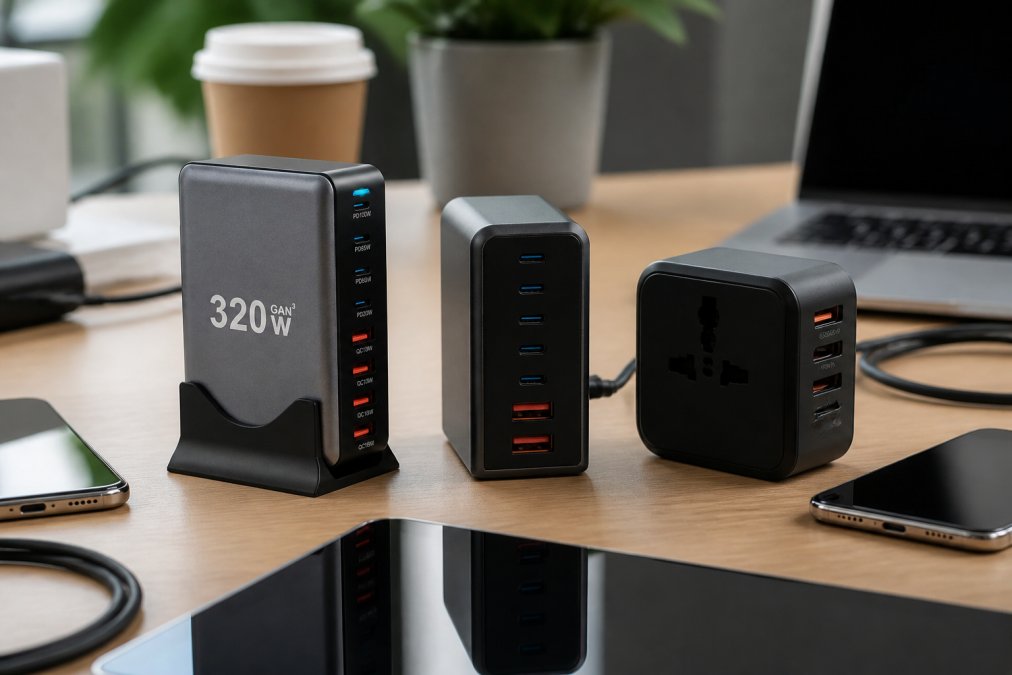
1. UGREEN GaN 35W Charger: Compact and Efficient
The UGREEN GaN 35W Charger represents the sweet spot for solo travelers needing lightweight, efficient charging. This charger delivers 35W of total output across two ports, one USB-C and one USB-A, capable of fast-charging a smartphone to 60% in approximately 30 minutes on compatible devices like the iPhone 15 series.
Gallium nitride technology enables significantly smaller physical dimensions than traditional chargers of equivalent power. It's roughly the size of a standard wall outlet, making it genuinely packable for carry-on luggage. The charger supports multiple fast-charging protocols including USB Power Delivery, Samsung Adaptive Fast Charge, and Huawei Quick Charge.
The UGREEN includes interchangeable plug heads for US, EU, and UK outlets, covering the majority of destinations most travelers visit. Temperature control circuitry monitors heat during operation, protecting your devices from damage during extended charging sessions.
At $30.99, this charger delivers excellent value for travelers prioritizing portability. The primary limitation is the 35W ceiling, it won't fast-charge high-powered laptops, though it handles tablets and phones efficiently.
2. 320W Charger USB-C Fast Desktop 8-Port: Multi-Device Power
For travelers carrying extensive device ecosystems, the 320W Charger USB-C Fast Desktop 8-Port from The Techie Den eliminates the need for multiple chargers. This desktop model features four USB-C ports and four USB-A ports, delivering intelligent power distribution across all connections.
The 320W total power output represents the highest capacity in this comparison. Each USB-C port supports up to 100W output, sufficient for powering modern MacBook Pro and Dell XPS laptops at full speed. The charger intelligently allocates power based on connected devices without throttling.
This model incorporates GaN technology across multiple power stages, enabling high wattage in a form factor roughly the size of a traditional desktop power strip. Unlike the UGREEN, this charger isn't designed for travel, it's meant for hotel rooms or temporary workspaces. The power cord is permanently attached, and the footprint requires desk or outlet space.
All eight ports can operate simultaneously without reducing speed, a significant advantage when powering entire device ecosystems. At $38.99, this charger costs less than many laptop-specific chargers while providing superior multi-device capability.
3. 3-in-1 Wireless Charging Station: Apple Ecosystem Solution
If your travel setup centers on Apple devices, the 3-in-1 Wireless Charging Station from The Techie Den consolidates charging for iPhone, Apple Watch, and AirPods into a single magnetic dock. This charger delivers 20W of wireless power, supporting fast charging for compatible iPhones.
Wireless charging eliminates cable management and port stress. The magnetic alignment ensures your phone charges properly even in low-light conditions. The charger includes a USB-C cable, and the compact footprint fits easily in carry-on luggage or hotel nightstands.
The critical limitation: this charger is exclusively for Apple devices. Additionally, wireless charging is slower than wired fast charging, expect 2-3 hours for a full phone charge versus 30-60 minutes with wired USB-C Power Delivery.
At $96.99, this charger targets Apple-exclusive travelers who prioritize convenience over speed.
| Charger Model | Starting Price | Max Output | Best For | Primary Limitation |
|---|---|---|---|---|
| UGREEN GaN 35W | $30.99 | 35W | Solo travelers, smartphones & tablets | Insufficient for laptop charging |
| 320W Desktop 8-Port | $38.99 | 320W | Multi-device professionals | Too large for carry-on |
| 3-in-1 Wireless | $96.99 | 20W wireless | Apple ecosystem users | Apple devices only |
Difference Between Travel Adapter and Voltage Converter Explained
Many travelers conflate adapters and converters, but they serve fundamentally different purposes. Understanding the distinction prevents expensive device damage.
A travel adapter changes the physical shape of your plug to fit foreign outlets. An adapter doesn't alter the electrical current, it's purely mechanical. Adapters are lightweight, inexpensive, and essential for any international trip.
A voltage converter actually transforms the electrical current from one voltage to another. Most international outlets deliver either 110V or 220V, compared to the 120V standard in the US.
Here's the critical detail: modern smartphones, tablets, and laptops are dual-voltage, meaning they automatically accept 100-240V input. Check your device's power brick for "100-240V" or "AC 100-240V", if you see this, you need only an adapter, not a converter.
Older devices and certain appliances aren't dual-voltage. Hair dryers, electric kettles, and some older laptops require converters if you're traveling to 220V countries. Using a non-dual-voltage device with only an adapter will destroy it immediately.
The Techie Den's universal chargers eliminate this confusion for modern devices. Since they accept 100-240V input, you only need the adapter portion, the plug configuration change.
How to Fix Charging Port Issues While Traveling
Charging port damage ranks among the most common device failures during travel. Dust, lint, and corrosion accumulate in ports, preventing proper electrical contact.
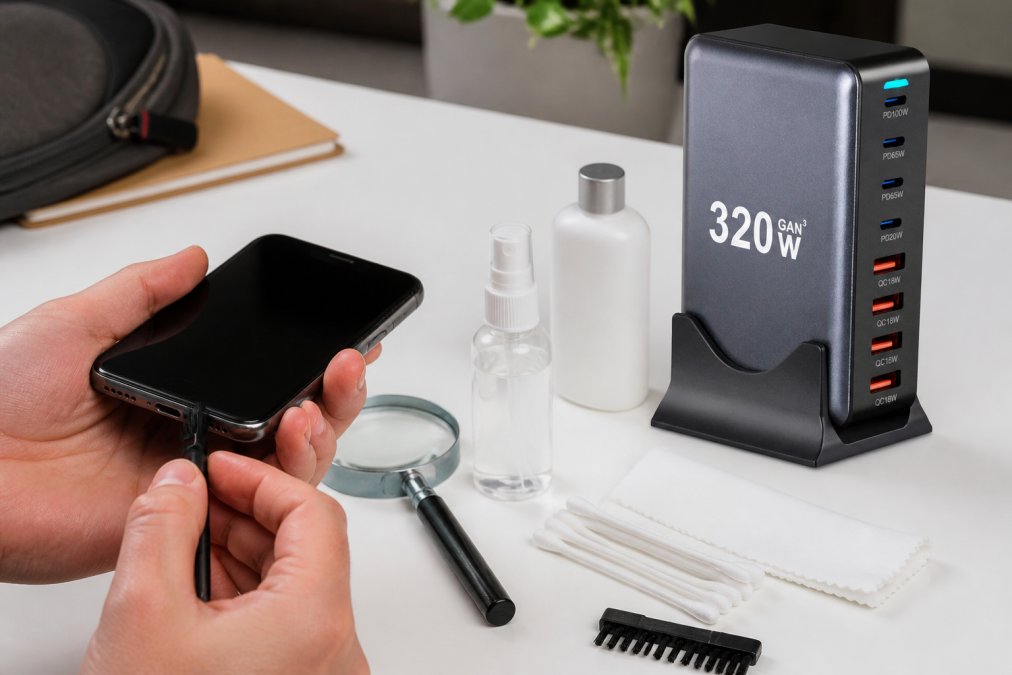
Start by inspecting the port visually. Use a flashlight and magnifying glass to look for debris, corrosion, or bent pins. Most port failures result from lint accumulation rather than structural damage. If you see visible debris, gently remove it with a dry soft-bristled brush or compressed air.
For oxidation or corrosion, isopropyl alcohol is your safest cleaning agent. Dampen a small brush with 90% isopropyl alcohol and gently brush the port's interior. Allow 2-3 minutes for complete drying before attempting to charge.
If the port appears physically damaged, bent pins, visible cracks, or loose components, you've exceeded DIY repair territory. Contact a local repair shop or use wireless charging if your device supports it.

Prevention beats repair while traveling. Use protective caps on charging ports when devices aren't in use. Avoid charging in dusty or sandy environments. Consider wireless charging options for devices that support them, eliminating port wear entirely.
If you're stuck without a functioning port and wireless charging isn't an option, portable battery packs keep your device functional until you can access professional repair services.
GaN Technology and Fast Charging Protocols
Gallium nitride has revolutionized power adapter design. GaN is a semiconductor material that handles electrical current more efficiently than traditional silicon, generating less heat and enabling smaller charger sizes.
Traditional chargers use silicon transistors that waste significant energy as heat. A 65W silicon charger requires bulky heat sinks and larger components. A GaN charger delivering the same 65W operates cooler and more efficiently, shrinking the overall package by 40-50%. For travelers, this means packing a high-power charger without sacrificing luggage space.
The efficiency gains also reduce heat-related device damage. Chargers that run cool protect your devices and your luggage from thermal stress, especially important in hot climates or when charging in enclosed spaces.
Fast charging protocols layer on top of GaN efficiency. USB Power Delivery is the universal standard, allowing devices to negotiate power delivery up to 240W. Your device tells the charger how much power it safely accepts, and the charger complies. This prevents overcharging and battery damage.
Qualcomm Quick Charge targets Android devices, while Samsung Adaptive Fast Charge and Huawei FCP serve similar purposes for specific ecosystems. The best travel chargers support multiple protocols simultaneously, ensuring compatibility regardless of device brand.
When comparing chargers, GaN technology plus multi-protocol support equals future-proof charging. As devices evolve and demand higher power, these chargers adapt without becoming obsolete.
Safety Features and Surge Protection
Travel exposes your devices to unpredictable power conditions. Voltage spikes, brownouts, and unstable current are common in developing regions and older hotel infrastructure. Quality surge protection prevents these fluctuations from damaging your devices.
Look for chargers with multiple layers of protection. Input surge protection guards against voltage spikes entering from the wall outlet. Output surge protection prevents damage if the charger itself fails. Temperature monitoring automatically reduces power or shuts down the charger if internal temperatures exceed safe thresholds.
Short-circuit protection is essential. If a charger's internal components fail, this feature cuts power immediately, preventing fires or device damage. All chargers from The Techie Den carry UL and FCC certifications, confirming they meet strict safety standards.
Intelligent power management is equally important. As your device's battery approaches full charge, the charger reduces output power. This prevents overcharging, which degrades battery health over time.
When traveling internationally, verify that your charger carries certifications from the regions you're visiting. CE certification is required in Europe, PSE certification in Japan, and FCC certification in the US.
Avoid counterfeit chargers, which lack proper safety features and pose genuine fire and electrocution risks. Purchase from established retailers like The Techie Den rather than unknown online marketplaces.
Selecting the best universal chargers for travel requires balancing power output, portability, and safety. The UGREEN GaN 35W Charger suits solo travelers prioritizing lightweight efficiency. The 320W Desktop 8-Port from The Techie Den handles multi-device professionals who stay in one location. The 3-in-1 Wireless Charging Station serves Apple ecosystem users seeking cable-free convenience.

The Techie Den offers all three options with verified safety certifications and intelligent power management. Get started with a universal charger that matches your travel style and device ecosystem, and eliminate the frustration of hunting for outlets in unfamiliar countries.
Frequently Asked Questions
What is the best universal charger for travel?
The best universal chargers for travel combine compact design, multiple ports, and global plug compatibility. The UGREEN GaN 35W Charger at $30.99 offers portability with dual-port fast charging, while the 320W Charger USB-C Fast Desktop at $38.99 suits travelers with multiple devices. Choose based on device count and destination regions. GaN technology ensures efficient power delivery without excess heat, making these options reliable for extended trips.
What is the difference between a travel adapter and voltage converter?
A travel adapter simply changes the physical plug shape to fit foreign wall outlets but doesn't alter voltage. A voltage converter actually transforms electricity from one voltage level to another (e.g., 220V to 110V). Most modern chargers are dual-voltage (100-240V), so they only need an adapter. Converters are only necessary for older appliances like hair dryers or shavers that aren't dual-voltage. Check your device's input label to determine which you need.
Do universal travel chargers work with all electronics?
Universal chargers work with most modern electronics that support USB charging, but compatibility depends on port type and power requirements. Devices with USB-C, USB-A, or wireless charging capabilities will work with universal chargers like our multi-port options. However, older devices with proprietary connectors or very high power demands may need different solutions. Always verify your device's charging port and wattage requirements before purchasing.
Why is GaN technology important in travel chargers?
Gallium nitride (GaN) technology enables smaller, more efficient chargers that deliver faster power without overheating. GaN chargers like the UGREEN 35W model generate less heat, charge devices 30-50% faster, and are more compact than traditional chargers. This means you get powerful charging in a lightweight form factor ideal for travel. The technology also reduces energy waste, making GaN chargers more sustainable for frequent travelers.
Is a universal travel charger worth buying?
Yes, a universal travel charger eliminates the need to buy region-specific chargers for each trip. Instead of carrying multiple adapters, one quality charger with interchangeable heads or universal compatibility works across destinations. The upfront investment ($30-$40) pays off quickly for frequent travelers. For casual travelers, a single dual-voltage USB-C charger covers most situations affordably and reliably.
This article was written using GrandRanker


