

Table of Contents
- Best Handheld Consoles for Travel: Quick Comparison
- Nintendo Switch OLED: Best Overall Handheld Console for Travelers
- Steam Deck OLED: Best Handheld Gaming PC Battery Life for Extended Play
- ASUS ROG Ally X: High-Performance Windows Gaming on the Go
- Analogue Pocket: Best Retro Emulation Handheld Console
- Handheld Console Travel Accessories and Setup Essentials
- How to Choose the Right Handheld Console for Your Travel Style
- Conclusion
Last Updated: August 9, 2026
Best Handheld Consoles for Travel 2026: Quick Comparison
Travel gaming has fundamentally shifted. Today, the best handheld consoles span everything from powerhouse gaming PCs to authentic retro systems, each solving different problems for different travelers. At The Techie Den, we've tested these devices across real travel scenarios, airport layovers, cross-country flights, hotel downtime, to understand which ones actually deliver on portable gaming.
The gap between a great travel handheld and a mediocre one isn't just about performance. It's about battery life lasting through a full flight, displays that don't strain your eyes after hours, weight that doesn't punish your carry-on, and software ecosystems that work offline when hotel Wi-Fi fails.
Quick Picks:
- Best Overall: Nintendo Switch OLED, the most versatile option for casual and serious travelers
- Best Gaming PC: Steam Deck OLED, superior battery life and a massive game library
- Best Budget Retro: Analogue Pocket, plays original cartridges with a stunning display
- Best Windows Gaming: ASUS ROG Ally X, maximum performance for AAA titles on the move
| Console | Best For | Key Strength | Notable Limitation |
|---|---|---|---|
| Nintendo Switch OLED | All travelers | Game library + build quality | 720p handheld resolution |
| Steam Deck OLED | PC gamers | Battery life + display | Heavier than Switch |
| ASUS ROG Ally X | AAA gamers | Performance | Premium pricing |
| Analogue Pocket | Retro fans | Original cartridge support | Limited modern games |
| Lenovo Legion Go | Display enthusiasts | 8.8" QHD screen | Size and weight |
Nintendo Switch OLED: Best Overall Handheld Console for Travelers
The Nintendo Switch OLED is the safest recommendation for most travelers. Its 7-inch OLED display delivers vibrant colors and deep blacks that look genuinely impressive in confined spaces. The 64GB storage is double the original Switch, and the improved kickstand actually works, critical when playing on a tray table during a flight.
What separates the OLED from competitors is software maturity. The game library spans indie puzzle games requiring 10 minutes of attention to sprawling RPGs justifying entire vacations. Zelda: Breath of the Wild and Tears of the Kingdom remain the gold standard for handheld adventure gaming. The exclusive ecosystem is impossible to replicate.
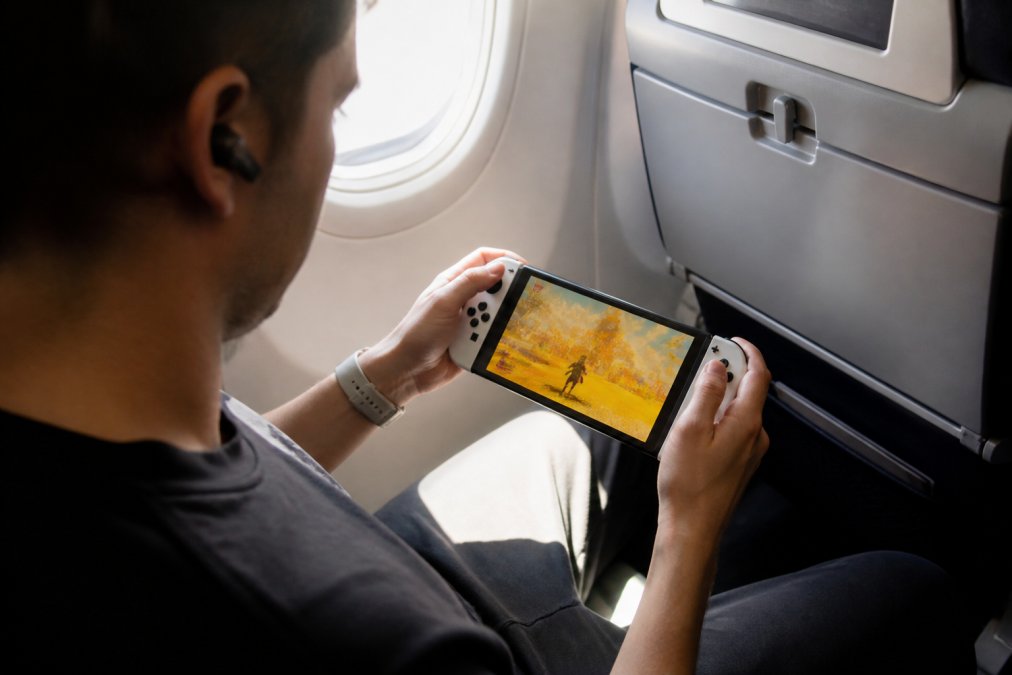
Battery life runs 6.5-9 hours depending on what you're playing. Lighter games like Pokémon stretch toward nine hours; demanding titles like Zelda drop closer to six. That's enough for most flights without needing a power bank, though a USB-C power bank is smart insurance for longer trips.
The real trade-off is resolution. The 720p display in handheld mode is noticeably less sharp than modern phones. If you're accustomed to high-refresh-rate gaming on desktop, the 60Hz cap feels dated. But at five-inch viewing distance during a flight, most players don't notice. The OLED color reproduction compensates for lower pixel density.
Durability is solid. The Joy-Con controllers have been redesigned to reduce joystick drift, though the issue isn't completely eliminated. The console handles being tossed in a backpack better than larger competitors.
The Techie Den recommends the Switch OLED for travelers who prioritize game library breadth over raw performance. You're paying for Nintendo's ecosystem, not modern hardware.
Steam Deck OLED: Best Handheld Gaming PC Battery Life for Extended Play
The Steam Deck OLED represents a genuine leap in handheld PC gaming. The 7.5-inch OLED display runs at 800p with 90Hz refresh rate, 50% sharper than the Switch and twice as smooth. Colors are rich, blacks are true, and the higher refresh rate makes gameplay noticeably more responsive.
Battery life is the headline upgrade. Valve claims 30-50% improvement over the original Steam Deck, translating to 4-6 hours on demanding games and up to 8 hours on lighter titles. For travel, that's transformative, you can play through an entire cross-country flight without hunting for an outlet.
The Steam Deck runs SteamOS, Valve's Linux-based operating system optimized for handheld gaming. The upside: it's simplified for gaming, boots fast, and doesn't waste battery on background processes. The downside: it's not Windows. Some games require compatibility workarounds, and productivity software is off the table.
Storage comes in 512GB or 1TB configurations, both upgradeable via microSD. For travel, the 512GB model is sufficient unless you're downloading dozens of large AAA titles before leaving home.
The learning curve is steeper than the Switch. The Steam Deck requires familiarity with Steam's interface, controller mapping, and occasional game-specific tweaks. Casual gamers find this frustrating; experienced PC gamers appreciate the flexibility.
Thermal management is solid but audible. The fan spins up during demanding games, particularly in warm environments. On a plane, you'll hear it, a minor annoyance rather than a dealbreaker.
The Techie Den positions the Steam Deck OLED as the best choice for travelers with existing PC gaming libraries. If you already own hundreds of games on Steam, the Deck unlocks them all portably. The battery life advantage is meaningful for travel, eliminating anxiety about finding power mid-journey.
ASUS ROG Ally X: High-Performance Windows Gaming on the Go
The ASUS ROG Ally X is the most powerful handheld in this guide. The AMD Ryzen AI Z2 Extreme processor handles AAA games at playable settings. If your goal is playing Baldur's Gate 3, Starfield, or Call of Duty on a handheld, the Ally X is the only realistic option.
The 7-inch IPS display runs 1920x1080 at 120Hz, delivering sharp visuals and smooth motion. The 120Hz refresh rate is noticeably smoother than the Steam Deck's 90Hz. Colors aren't as vibrant as OLED panels, but brightness is excellent for outdoor use, a practical advantage during travel.
Windows 11 is the operating system, meaning full compatibility with the entire PC game ecosystem. No workarounds, no compatibility checks. Download, install, play.
The trade-off is battery life. The Ally X manages 4-6 hours on demanding games. For long flights, you'll need a power bank or access to an outlet.
The device is premium-priced and premium-built. The aluminum chassis feels solid, buttons have satisfying tactile feedback, and ergonomics are thoughtful. But weight matters during travel, the Ally X is noticeably heavier than the Switch, and after three hours of holding it, your hands will know.
The Armoury Crate app for managing games is less intuitive than competitors' interfaces. You'll spend time configuring performance profiles and managing driver updates, fine if technically inclined, frustrating if you just want to play.
Analogue Pocket: Best Retro Emulation Handheld Console
The Analogue Pocket is fundamentally different from every other device on this list. It plays original Game Boy, Game Boy Color, and Game Boy Advance cartridges on authentic hardware. If you own a collection of physical cartridges, this is the only way to play them on a modern handheld.
The 3.5-inch display is a marvel of engineering. At 1600x1440 resolution and 615 pixels per inch, it's sharper than modern smartphone displays. The LCD panel renders classic 8-bit and 16-bit graphics with stunning clarity, revealing sprite detail you never noticed on original hardware.
The device is compact and lightweight, genuinely pocketable. Battery life easily clears 20+ hours on a charge. For travelers, you can play for days without thinking about power.
Compatibility spans over 2,780 Game Boy cartridges out of the box. Adapters are available separately for Game Gear, Neo Geo Pocket Color, Atari Lynx, and TurboGrafx-16 games, effectively making this a universal retro handheld.
The downside is obvious: no modern games. You're limited to what was released between 1989 and 2008. If your travel gaming includes anything contemporary, the Pocket is a supplement, not a replacement.
Build quality is exceptional. The matte finish resists fingerprints, buttons have satisfying resistance, and construction feels premium. This is a device designed to last decades.
The Analogue Pocket is the choice for travelers who are nostalgic for classic gaming, own physical cartridges, or want a device with zero maintenance requirements and exceptional battery life.
Handheld Console Travel Accessories and Setup Essentials
The best handheld console is only half the equation. Accessories determine whether you're comfortable gaming for hours or frustrated after 30 minutes.
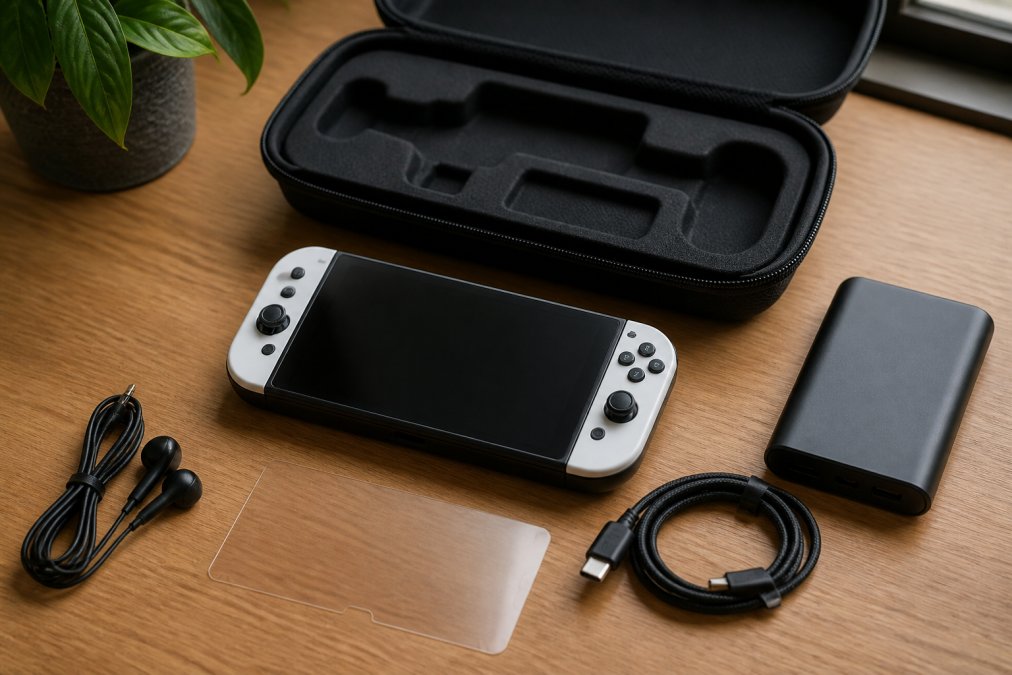
Power Solutions. A USB-C power bank rated for at least 20,000mAh is essential for handhelds without 10+ hour battery life. Choose one that supports USB Power Delivery; standard charging is too slow for gaming while powered.
Carrying Cases. Hardshell cases protect against drops and impacts. Look for cases with internal padding separating your handheld from cables. For flights, a hardshell case inside a backpack provides redundant protection.
Screen Protectors. Tempered glass screen protectors are cheap insurance against scratches. They reduce brightness slightly but the protection is worth the trade-off for travel.
Stands and Mounts. A foldable stand lets you play without holding the device, reducing hand fatigue. Suction cup mounts attach to airplane seat trays or hotel desks.
Audio Solutions. Built-in speakers are adequate for casual play but exhausting for extended sessions. Lightweight earbuds deliver better audio without significant weight.
Charging Cables. Bring redundant USB-C cables, one in carry-on and one in checked luggage. Cables fail or get lost; backups eliminate frustration.
The Techie Den recommends prioritizing power and protection over ergonomic accessories. A good power bank and protective case are non-negotiable.
How to Choose the Right Handheld Console for Your Travel Style
Choosing the right device depends on three variables: your existing game library, your tolerance for complexity, and your power management expectations.
If you own a PS5 or gaming PC at home: The Nintendo Switch OLED is logical. It plays a completely different game library, so you're not paying for duplicate functionality. Expect 6-8 hours of battery life per charge.
If you're a PC gamer with hundreds of Steam titles: The Steam Deck OLED offers the best value for accessing your existing library portably. The learning curve is real, but the payoff is massive. Expect 4-6 hours on demanding games.
If you want maximum performance for AAA titles: The ASUS ROG Ally X is the only realistic option. It's expensive and heavy, but it's the only handheld running modern games at acceptable settings.
If you own retro game cartridges: The Analogue Pocket is the only device playing original hardware authentically. Battery life is exceptional, and the display is stunning.
If you travel frequently but don't identify as a gamer: The Switch OLED remains the safest choice. The game library spans casual puzzle games to serious RPGs. The ecosystem is mature, accessories are abundant, and resale value is strong.
Consider your actual travel patterns. Short trips favor devices with solid battery life and minimal setup (Switch OLED). Extended trips justify carrying a power bank and larger device (Steam Deck OLED or ASUS ROG Ally X).
Weight matters more than specs. A device you leave in your hotel because it's too heavy defeats the purpose. The Switch OLED is genuinely pocketable; the Legion Go is not.
Conclusion
The best handheld consoles for travel 2026 aren't determined by raw performance specs. They're determined by ecosystem fit, battery endurance, and honest assessment of how you actually play games during travel. The Nintendo Switch OLED remains the most versatile option, balancing game library depth, battery life, and build quality without requiring technical knowledge. The Steam Deck OLED wins for PC gamers willing to manage Linux quirks in exchange for exceptional battery life. The ASUS ROG Ally X dominates for performance-focused players. The Analogue Pocket is the specialist's choice for retro authenticity.
At The Techie Den, we've learned that the wrong handheld ends up abandoned in a drawer. The right one becomes an essential travel companion. Start with your existing game library and device ecosystem. Then prioritize battery life for your typical trip length. Finally, hold the device in your hand, weight and ergonomics matter more than you think. The Techie Den's curated selection of gaming consoles and travel accessories makes it easy to find the right handheld and equip it with the protection and power solutions that keep it reliable throughout your travels.
Frequently Asked Questions
What is the best handheld console for traveling in 2026?
The Nintendo Switch OLED offers the best balance of portability, battery life (4.5-9 hours), and exclusive game library for most travelers. However, the best choice depends on your needs: the Steam Deck OLED suits PC gamers, the Analogue Pocket works for retro enthusiasts, and the PlayStation Portal works if you own a PS5. Consider offline playability, display quality, and form factor when choosing a handheld console for travel.
Which handheld gaming PC offers the best battery life for long flights?
The Steam Deck OLED delivers the longest battery life among handheld gaming PCs, with 30-50% improvement over the standard model, lasting 3-8 hours depending on game demands and TDP settings. The ASUS ROG Ally X and Lenovo Legion Go offer 2-3 hours of gameplay, making the Steam Deck the clear winner for extended travel gaming without access to power outlets during flights.
Is the Steam Deck or Nintendo Switch better for travel?
The Nintendo Switch OLED is better for casual travel due to lighter weight, longer battery life, and no setup required. The Steam Deck OLED suits travelers who want access to their full PC game library and don't mind the larger size or shorter battery life. Choose the Switch for simplicity and portability; choose the Steam Deck if you prioritize game selection and graphics performance.
What should I look for in a travel-friendly gaming handheld?
Prioritize battery life (aim for 6+ hours), lightweight design under 1 pound, durable build quality, offline playability, and a protective carrying case. Check the refresh rate for smooth visuals, input latency for responsive controls, and thermal management to prevent overheating during extended play. Consider whether you need cloud gaming capability or prefer local storage and offline mode for uninterrupted travel gaming.
Are retro handheld consoles worth buying for travel in 2026?
Yes, if you value authentic retro gaming and offline playability. The Analogue Pocket plays original Game Boy and Game Boy Advance cartridges with stunning display quality and zero dependency on internet or digital stores. The Evercade EXP offers curated licensed classics. Both excel for travel since they require no online connection, making them ideal for flights and areas with poor connectivity.
This article was written using GrandRanker


